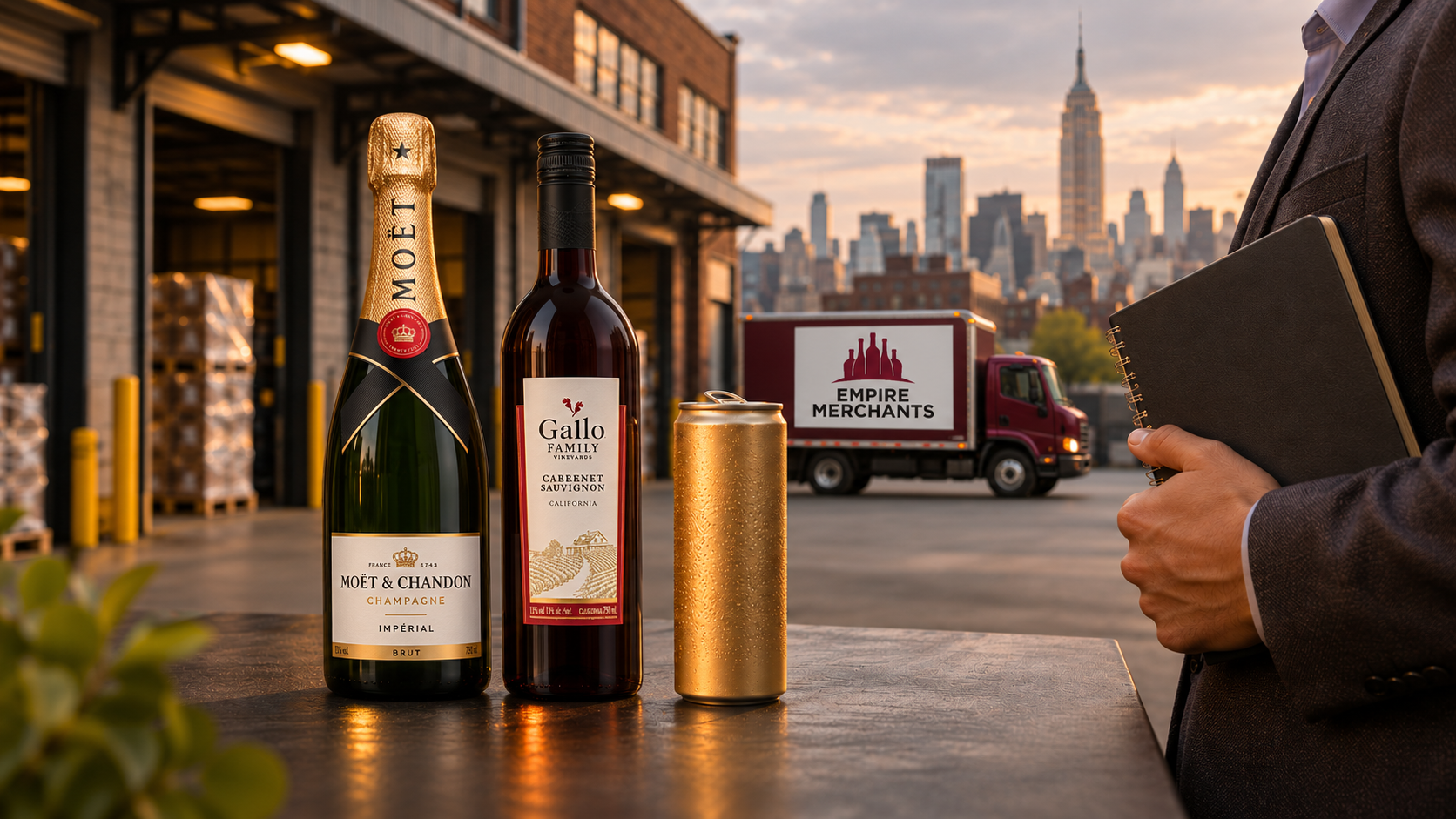
New York’s beverage distribution landscape is changing again. For emerging wine, spirits and ready-to-drink brands, the lesson is immediate: know how your products reach buyers, who supports your accounts and what happens if your distribution arrangements change.
Recent reporting about Gallo and Moët Hennessy leaving Empire Merchants puts those questions into focus. For smaller suppliers, this is a reason to review market plans and strengthen relationships before uncertainty interrupts sales.
What Has Been Reported—and What Is Confirmed
On November 24, 2026, Brewbound reported that Gallo and Moët Hennessy would leave Empire Merchants effective January 1, 2027. Gallo’s portfolio includes High Noon, making the development relevant to RTD brands as well as wine and spirits suppliers.
Separately, Shanken News Daily published a statement from Moët Hennessy confirming Southern Glazer’s as its new Metro New York distributor from January 1. The statement described both distributors handling the market during December to support continuity.
Brewbound also reported a possible shutdown of Empire’s Metro New York business. That remains a reported development, rather than a confirmed company announcement in the sources reviewed for this article. Brands and buyers should verify their own product availability, ordering arrangements and transition dates directly with their supplier and distributor contacts.
This is a developing story. Reporting and analysis below reflect information available on November 25, 2026.
The Bigger Question: How Dependent Is Your Brand on One Partner?
In related LinkedIn commentary, Rohan Duggal argues that distributor strength depends heavily on the supplier relationships behind its portfolio. His post highlights the importance of watching delivery performance and preparing alternatives. We view that as a useful operational lens; commentary about possible outcomes should be distinguished from confirmed company plans.
For an emerging brand, the practical question is how much of its business depends on a single relationship. If one representative leaves, can the brand still reach its buyers? If ordering moves to another wholesaler, does anyone have an accurate record of active accounts? If a launch is delayed, who will explain the next steps to retailers and restaurant teams?
A distribution agreement creates a route to market. A strong account-development process helps the brand maintain its presence when that route changes.
What Distributor Changes Can Mean for Emerging Brands
A transition can create work for everyone involved: new account setup, inventory reconciliation, ordering changes, sales-team introductions and revised delivery expectations. Smaller brands should consider how those tasks could affect their own launch calendars and existing placements.
At a receiving distributor, new portfolio additions may also compete for onboarding time and sales attention. That is a planning consideration, not a prediction about any particular distributor’s service. Brands can prepare by presenting clear account priorities, realistic volume expectations and a specific support plan.
At the account level, buyers need dependable information. A retailer may want confirmation of stock and delivery timing. A restaurant may need to know whether a featured wine will remain available. Consistent communication helps preserve trust while operational details are resolved.
Five Steps Brand Owners Can Take Now
1. Build a current account and inventory picture
Keep an accurate list of active accounts, buyer contacts, recent orders, reorders and outstanding issues. Reconcile inventory and open orders with the parties responsible for them. A usable account history makes it easier to brief a new representative or prioritize follow-up.
2. Verify the next delivery, not just the overall relationship
Ask specific questions about available stock, order cutoffs, delivery dates and who will handle service questions. Treat a buyer’s order as unfinished until the product arrives and the account is supported. Record confirmed information and communicate changes promptly.
3. Evaluate partners against the accounts you need
Review portfolio fit, territory coverage, category experience, delivery capabilities and reporting access. A strong restaurant network may matter more to one winery; independent retail coverage may matter more to another. Ask how your brand will be introduced and supported after authorization.
4. Keep a qualified alternative plan
Research potential partners before a disruption forces a rushed choice. Understand their capabilities and the information they would need to evaluate your brand. Any change should follow the applicable agreement and regulatory requirements, with qualified advice where needed.
5. Give local sales execution a clear owner
Define who visits accounts, follows up with buyers, conducts staff education and tracks reorders. Distributor coordination and supplier activity should reinforce each other. A named person, a realistic call schedule and a shared set of priorities make that work easier to manage.
Where Breakout Brand Group Fits
These are the day-to-day challenges Breakout Brand Group helps emerging beverage brands address. Our work connects distributor strategy with the local sales activity needed to build a market.
Distributor research and selection: We help brands identify and evaluate potential partners based on product positioning, territory needs, account access and sales expectations.
Market-entry and account planning: We develop focused target lists for retail and on-premise channels, helping brands decide where to concentrate their time and resources.
Buyer relationships and field support: We help introduce products, develop placements, support tastings and activations, and maintain contact with accounts as the market evolves.
Distributor coordination and performance tracking: We help keep priorities visible, follow up on account activity and monitor sell-through, depletions and reorders so brands can assess progress.
During a distribution transition, this work can help a brand organize account information, communicate with buyers and prepare a practical sales plan for its next stage. The objective is continuity at the account level and a clearer view of what the brand needs from its partners.
A New York Story With a Broader Market Lesson
The developments discussed here concern New York. For brands planning growth in Metro New York and Florida, the broader lesson is to assess each territory on its own merits. A successful partner in one state does not automatically provide the same account access, portfolio fit or field support in another.
Breakout Brand Group brings hands-on market development and sales experience to that planning process. We help emerging wine, spirits and RTD companies turn distribution access into buyer relationships, repeat business and a more durable market presence.
When distribution changes, a brand’s relationships, account knowledge and commitment to local execution become even more valuable.
Keep Your Brand Moving Forward
Entering New York or Florida, reviewing distributor options or looking for stronger local sales support? Let’s discuss the accounts, partners and activities that can help your brand build its next stage of growth.
Contact Breakout Brand GroupSources: Brewbound, November 24, 2026; Shanken News Daily, November 24, 2026; and Rohan Duggal’s related LinkedIn commentary.
Original market-development analysis by Breakout Brand Group. Header image is an AI-created editorial illustration.